Production Planning in a Cheese Factory: From Sales to Chef Orders
How many kilos of halloumi do we need this week? How many litres of milk does that take? Which day do we make it? In Lebnara the plan is calculated from your real sales, your customers' orders and your finished stock, then spread over working days within vat capacity, and every line reaches the chef as a production order ready on his board.
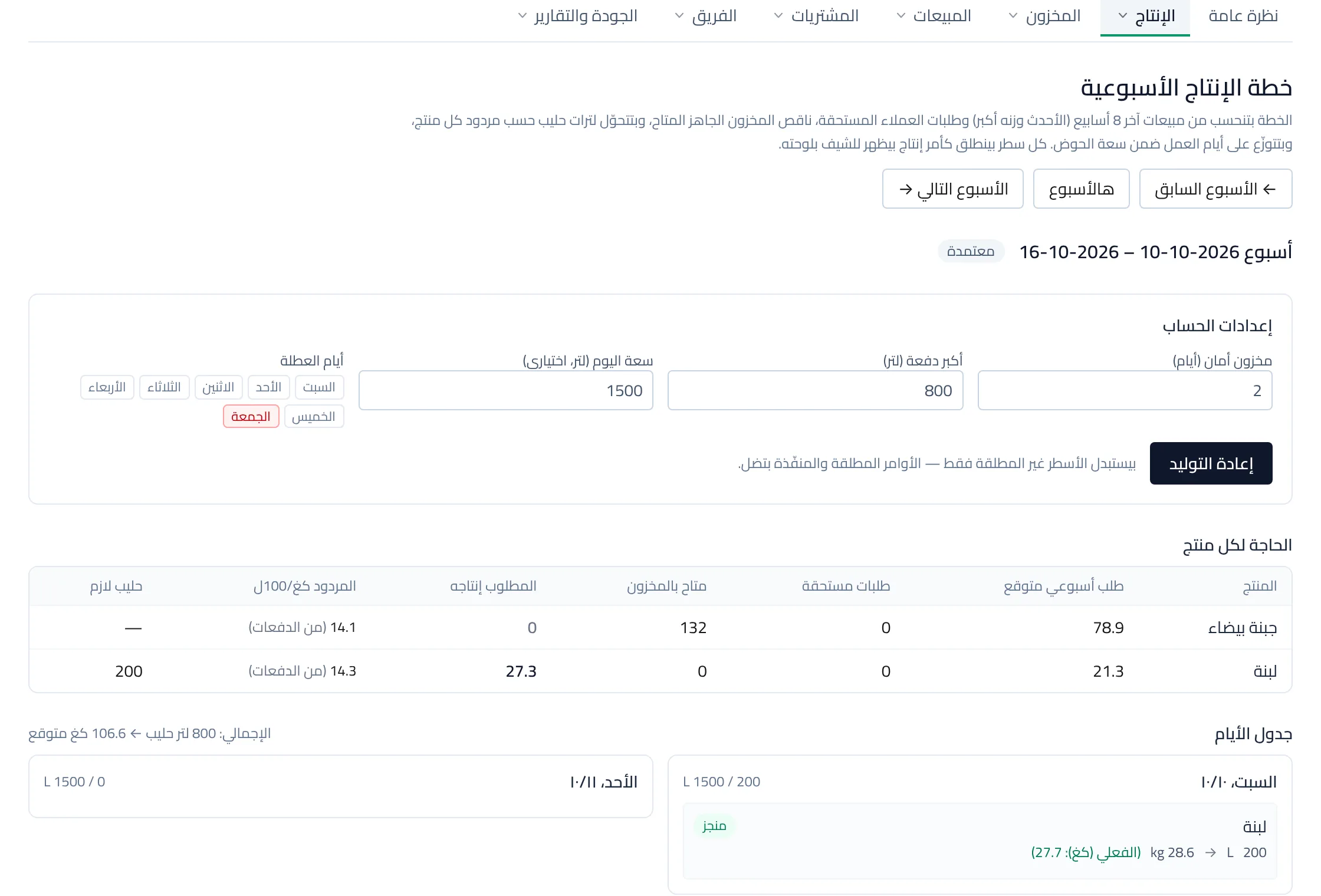
How the plan is calculated
| Item | Where it comes from | Note |
|---|---|---|
| Expected weekly demand | Sales of the last 8 weeks | Recent weeks weigh more, and a new product is not penalised by weeks before its first sale |
| Customer orders due | Customer orders not yet delivered or reserved | The larger of these and expected demand is taken so nothing is counted twice |
| Safety stock | Number of days you set | Two days of demand by default |
| Available stock | Finished product balance that is not expired | Minus quantities reserved for customer orders |
| Litres of milk | The product's actual yield from your batches | Or the expected yield from the chef card if there are no batches |
Spread over days within vat capacity
- You set the largest batch in litres, the day's capacity and days off.
- The software splits each product into batches and spreads them over the least loaded days, avoiding the same product twice on the same day.
- If capacity is not enough, what was not scheduled is shown clearly, so you decide: an extra shift or postponing.
- You adjust litres or add a manual line, and regenerating the plan does not touch released or executed orders.
Production orders that reach the chef directly
Release the day's orders in one press and they appear on the Chef Board with the milk quantity and expected kilos. The chef starts the batch from the order, so the quantity fills in automatically and the planned product card is marked. When the batch is closed the order becomes "done" with the actual weight, and if cancelled or the milk is rejected, the order becomes available again.
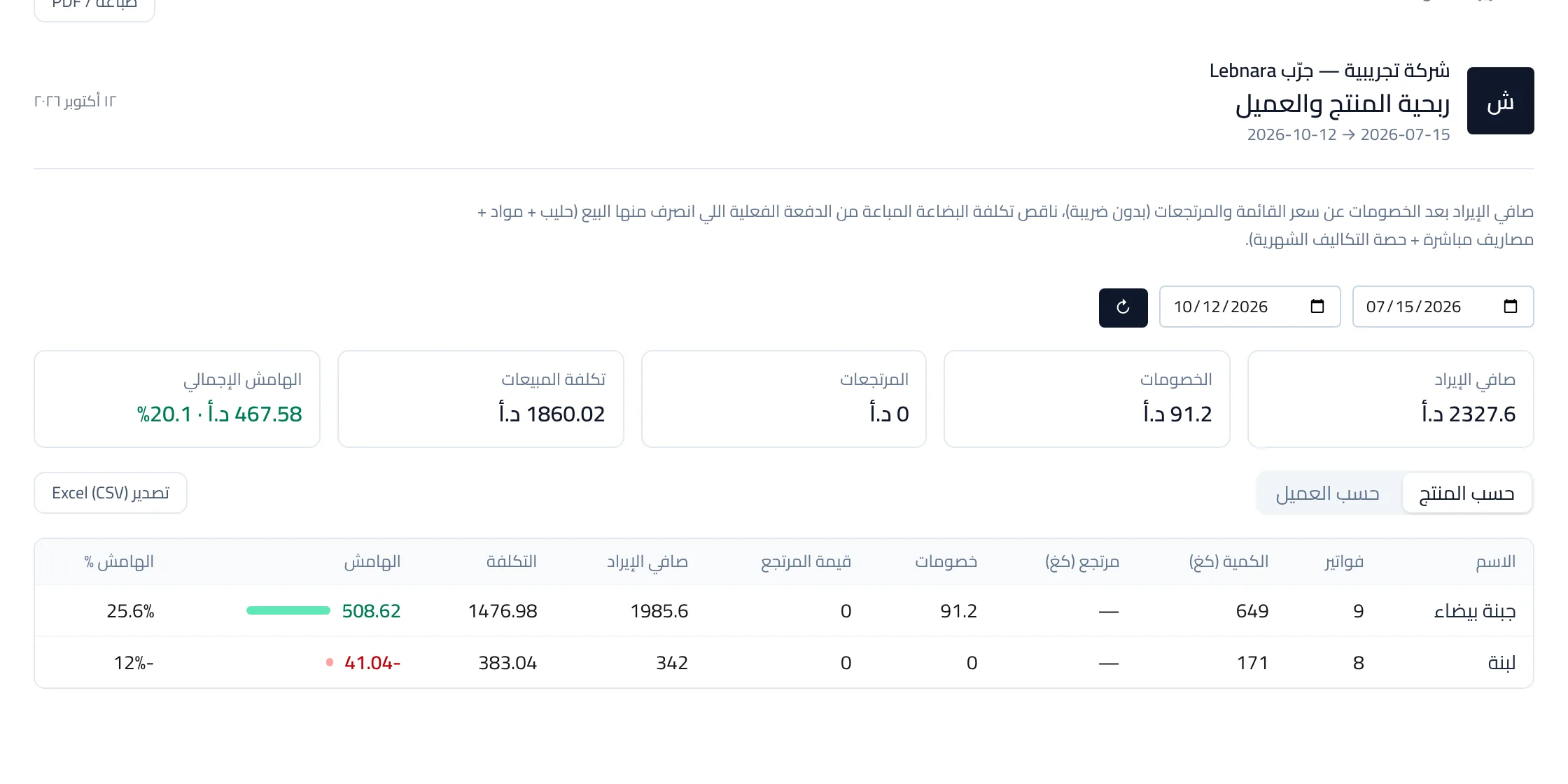
Profitability of every product and customer
- Net revenue after discount from list price and returns, excluding tax.
- Cost of goods from the actual batch the sale was issued from: milk, materials, direct expenses and the share of monthly costs.
- A saleable return goes back to stock and carries no cost; a damaged one stays a cost against the sale.
- Sorted by margin, with CSV export and PDF printing.
A daily report in the morning and alerts the moment things happen
- The daily factory report: production and yield, sales, waste, materials under minimum, near expiries, tanks, today's orders and overdue receivables. It arrives by email at 7 a.m., with a WhatsApp button and a PDF copy.
- Instant mobile alerts: a critical shortage after any issue, a critical control point exceeded in the Chef Board, rejected milk, a high tank temperature, and a near expiry. Once a day per event so you are not bothered.
Frequently asked questions
- Do I need a long sales history?
- No. One week of sales is enough for the calculation to start, and the more weeks (up to 8) the more accurate the forecast. You can always add a manual line or edit litres.
- Where does a product's yield come from?
- From your actual batches in the last 120 days (net kilos per 100 litres). If there are no batches yet, the expected yield in the chef card is used.
- Does it conflict with customer orders and reservation?
- No. Quantities reserved for confirmed orders are deducted from what is available, and unreserved orders due this week enter the calculation.
- Is it included in the subscription?
- Yes, within the cheese factory module ($20 per month) with the Chef Board, inventory and traceability.
Try Lebnara now, no sign-up
A full demo company with every module, opens instantly.